Ihr Warenkorb ist leer.

Ihr Warenkorb ist leer.

Multiples and spray paintings by Ottmar Hörl, Wertheim and Thomas Baumgärtel, Cologne
A kunstvoll e.V. project in collaboration with the City of Bad Nauheim, cultural department.
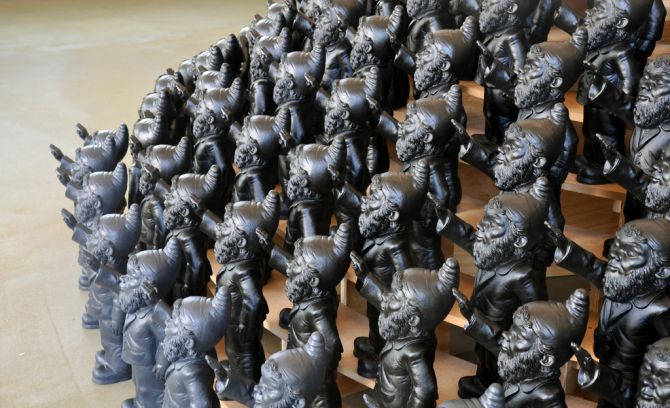
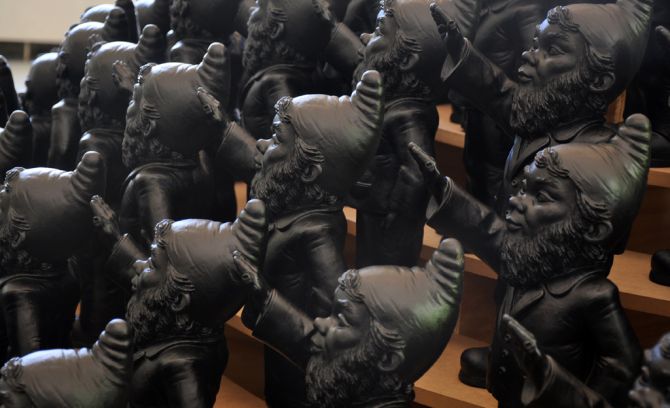
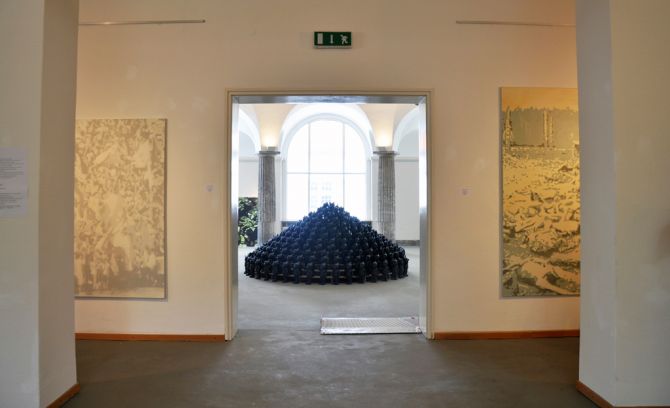
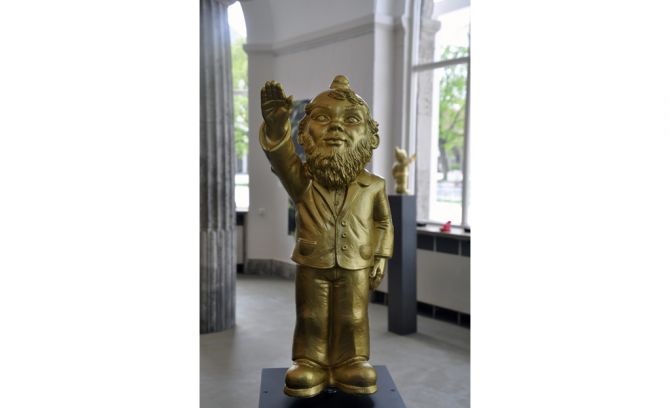
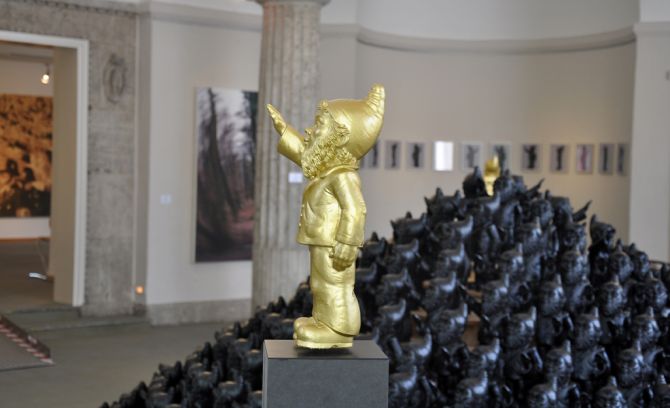
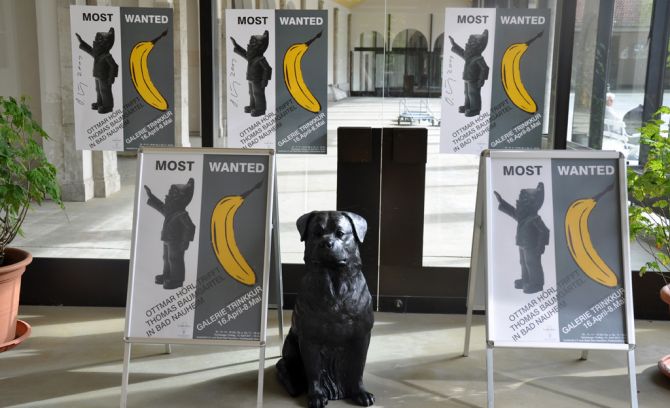
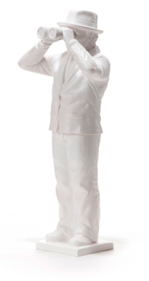
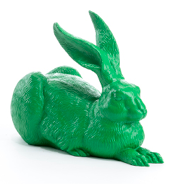
The "kunstvoll e. V." art society and the cultural department of Bad Nauheim are presenting the first joint exhibition of two of the most famous German project artists at the Trinkkur Gallery in Bad Nauheims Trinkkur health establishment. Visitors will be greeted by a conception specially developed by the two remarkable artists for this exhibition that will surprise, enthrall and fascinate visitors. Ottmar Hörl will be showing his "most wanted" multiple, a "gnome performing the Hilter salute". The rotunda of the Trinkkur Gallery will accommodate another Hörl installation meant to take visitors by surprise. The artist will furthermore be presenting a number of his classics. Thomas Baumgärtel's banana spray paintings will also be part of the exhibition. To match the headline of "most wanted", the world's most notorious criminals will be incorporated in these works. (Excerpt from a "kunstvoll e.V. press release.)
Photos: Jürgen Wegener